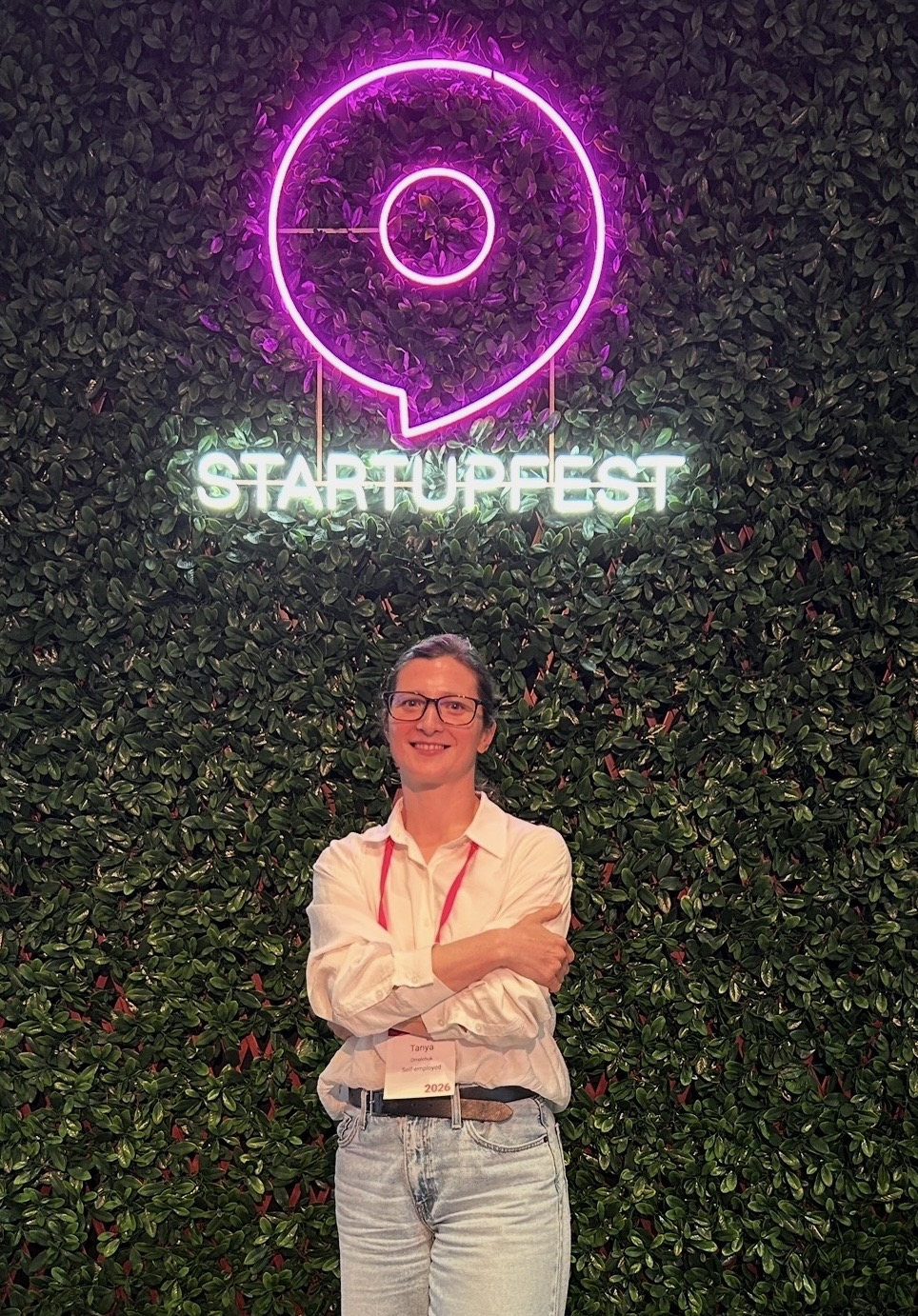
I had roughly 62 conversations at Startupfest this year. I tried to keep count, which already tells you how unusual that is for me: I’m an introvert.
I wasn’t particularly interested in collecting pitches. I wanted to understand how people arrived at what they were building.
And a pattern emerged.
Many founders began with accumulated expertise: a degree, a career, or years spent inside an industry. Eventually, they recognized that some part of that knowledge could become a product, a company, or a market position.
That is a perfectly rational way to build. It’s also how I often think: identify what you know, determine where it creates value, and make it commercially useful.
But a few conversations seemed to run in the opposite direction.
These people hadn’t started with expertise and then looked for a way to monetize it. They had become absorbed in a system: how it behaved, where its rules created an opening, or what everyone else appeared to be missing. The business followed from that investigation.
One entrepreneur told me how he had built a business around a very specific, short-lived tax program. What stayed with me wasn’t how much money he had made. It was how much pleasure he still took in having understood the mechanism. He spoke about it almost like an elegant solution to a puzzle: the rules had been visible to everyone, but he had read them differently.
I noticed something similar while listening to Harper Reed and Alistair Croll speak about AI. Their ideas were compelling, but what interested me more was the thinking underneath them. They weren’t simply presenting conclusions about AI. They appeared to be actively living inside the questions: testing interpretations, following implications, and trying to understand what kind of system is emerging around us.
The distinction isn’t necessarily between “serious” founders and idealistic ones, or between people who care about money and people who don’t. Everyone building a company eventually has to think about value.
The distinction is what comes first. Sometimes curiosity serves the business: you investigate because you need a useful answer. Other times, the business becomes a vehicle for the investigation: you build because you have seen something you need to understand more fully.
I recognize both modes in myself. But the second is where I do my best work, when I become absorbed in how a workflow actually behaves, why the obvious solution keeps failing, and what becomes possible once the underlying structure is visible.
I left Startupfest wanting to spend more time in that mode, and around people who work that way. Because this curiosity produces a different quality of attention. And sometimes, that attention is what allows someone to see the opportunity before it has an obvious name.